FAQs
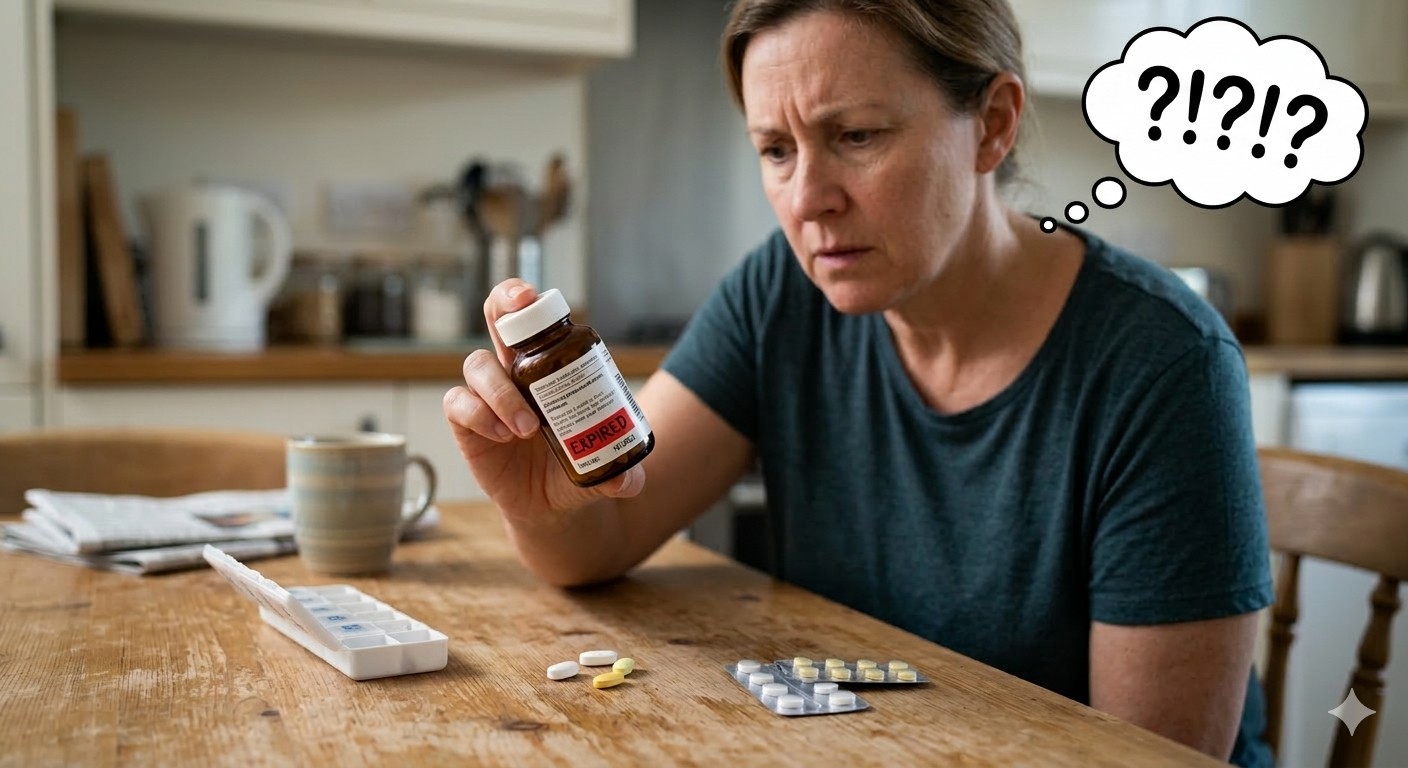
1. How should I safely dispose of expired medications?
Expired medications should not be thrown loosely into household trash or flushed down toilets, as this can contaminate water systems and contribute to environmental exposure—particularly with antibiotics, which may promote antimicrobial resistance. The safest option is a pharmacy or community drug take-back program. If unavailable, mix medicines with undesirable waste (e.g., coffee grounds), seal them, and discard securely.
2. Does a “Best Before” date for food mean the same thing as an expiration date for medicine?
No. A “Best Before” date on food usually refers to quality, not safety; the product may still be safe to eat after that date if stored properly, though its taste or texture may decline. In contrast, a medication expiration date indicates the period during which the manufacturer guarantees the drug’s potency, stability, and safety, which are critical for effective treatment.
3. Is it safe to take expired vitamins or supplements?
Expired vitamins and supplements are unlikely to become toxic, but they often lose potency over time. Nutrients such as vitamin C, B-complex vitamins, and probiotics degrade relatively quickly, which reduces their effectiveness. Because supplements are less strictly regulated than prescription drugs, their stability can vary. If a product smells unusual, changes color, or shows deterioration, it should be discarded.
Reference
1. Ebrahim, A. J., Teni, F. S., & Yimenu, D. K. (2019). Unused and expired medications: are they a threat? A facility-based cross-sectional study. Journal of primary care & community health, 10, 2150132719847857.
2, Coffey, K. C. (2013). Is there a role for expired medications in developing countries?. Clinical pediatrics, 52(1), 7-9.
3. González-González, O., Ramirez, I. O., Ramirez, B. I., et al. (2022). Drug stability: ICH versus accelerated predictive stability studies. Pharmaceutics, 14(11), 2324.
4. Sharma, S., Sharma, A. K., Moe, H. W., et al. (2022). A study to investigate the chemical potency, physical stability, and efficacy of analgesic agents over a period of two years post their expiry date. medical journal armed forces india, 78, S194-S200.
5. Zhou, G., Marathe, G. K., Hartiala, J., et al. (2013). Aspirin hydrolysis in plasma is a variable function of butyrylcholinesterase and platelet-activating factor acetylhydrolase 1b2 (PAFAH1b2). Journal of Biological Chemistry, 288(17), 11940-11948.
6. Reichard, J. F., Phelps, S. E., Lehnhardt, K. R., et al. (2023). The effect of long-term spaceflight on drug potency and the risk of medication failure. npj Microgravity, 9(1), 35.
7. T. Magari, R., P. Murphy, K., & Fernandez, T. (2002). Accelerated stability model for predicting shelf‐life. Journal of clinical laboratory analysis, 16(5), 221-226.
8. Arioua, A., & Shaw, D. (2024). Use of expired drugs: patients benefits versus industry interest. JMA journal, 7(1), 1-4.
9. Zilker, M., Sörgel, F., & Holzgrabe, U. (2019). A systematic review of the stability of finished pharmaceutical products and drug substances beyond their labeled expiry dates. Journal of pharmaceutical and biomedical analysis, 166, 222-235.
10. Fagan, A., Bateman, L. M., O’Shea, J. P., et al. (2024). Elucidating the degradation pathways of human insulin in the solid state. Journal of Analysis and Testing, 8(3), 288-299.
11. Uy, M. R. (2019). Sterility duration of single-use vials for antineoplastic agents or monoclonal antibodies extended with a closed-system transfer device.
12. Tyski, S., Burza, M., & Laudy, A. E. (2025). Microbiological Contamination of Medicinal Products—Is It a Significant Problem?. Pharmaceuticals, 18(7), 946.
13. AlGhadeer, H., & AlHumaidan, A. (2022). Bilateral toxic epithelial keratopathy following instillation of expired topical eye drops. Journal of Clinical Pharmacy and Therapeutics, 47(12), 2379-2382.
14. Mayer, G. A. (1974). Instability of nitroglycerin tablets. Canadian Medical Association Journal, 110(7), 788.
15. Aljohar, H., Altoum, G. H., Alkarni, S. A., et al. (2025). Quality assessment of some specific drug products beyond expiration dates in Saudi Arabia. Saudi Pharmaceutical Journal, 33(3), 9.
16. Davido, B., Michelon, H., Mamona, C., et al. (2024). Efficacy of expired antibiotics: A real debate in the context of repeated drug shortages. Antibiotics, 13(5), 466.
17. Ogunshe, A., & Adinmonyema, P. (2014). Evaluation of bacteriostatic potency of expired oral paediatric antibiotics and implications on infant health. The Pan African Medical Journal, 19, 378.
18. Khan, S. R., Kona, R., Faustino, P. J., et al. (2014). United States Food and Drug Administration and Department of Defense Shelf‐Life Extension Program of Pharmaceutical Products: Progress and Promise. Journal of Pharmaceutical Sciences, 103(5), 1331-1336.
19. Iserson, K. V. (2021). Should we use expired drugs when necessary?. The Journal of Emergency Medicine, 60(5), 669-673.
20. Cantrell, L., Suchard, J. R., Wu, A., et al. (2012). Stability of active ingredients in long-expired prescription medications. Archives of internal medicine, 172(21), 1685-1687.
21. Pathak, R., Gaur, V., Sankrityayan, H., et al. (2023). Tackling Counterfeit Drugs: The Challenges and Possibilities: R. Pathak et al. Pharmaceutical Medicine, 37(4), 281-290.