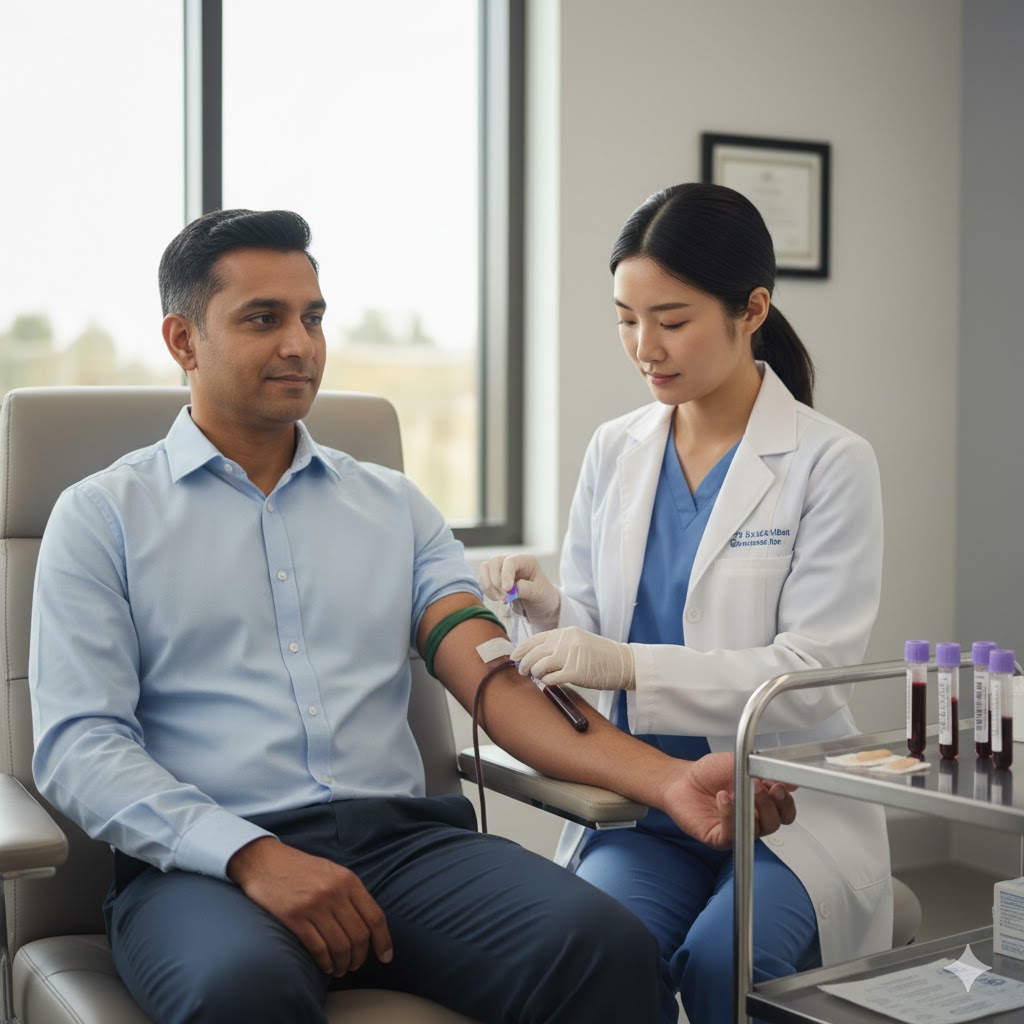
Traditional cancer diagnosis often relies on tissue biopsies, which require invasive surgery to extract physical samples from a patient. While these procedures are effective, they carry inherent risks and provide only a static snapshot of a tumor. In contrast, liquid biopsies analyze biological markers found in body fluids, and this approach offers a non-invasive way to detect cancer at its earliest stages1. It allows clinicians to monitor the disease without the physical trauma of surgery, and this way the technology is transforming how we understand oncology.
Liquid biopsies mainly analyze substances released by tumors into the blood, including circulating tumor cells and pieces of genetic material. Because these markers circulate throughout the body, a simple blood draw can capture them, and this process provides a systemic view of the health of the patient. This method not only removes the need for repeated, uncomfortable tissue samples but also allows doctors to monitor changes in a tumor as they happen. This dynamic perspective is crucial for effective treatment planning, which helps to ensure that therapies remain aligned with the current state of the disease.
The science behind this field has matured rapidly over the last decade, even though early attempts struggled with low sensitivity and technical hurdles. However, advancements in sequencing and microfluidics have changed the landscape, and modern assays can now detect a single tumor DNA fragment among billions of normal ones. Thanks to this accuracy, liquid biopsy stands out as an invaluable diagnostic tool, which helps to connect fundamental research with real-world medical practice2. As a result, it brings new possibilities for improved patient care across the globe.
Key biomarkers in the bloodstream
Liquid biopsies rely on several distinct types of biological information, and each biomarker provides a unique perspective on the state of a disease. Identifying these markers requires highly sensitive equipment and specialized laboratory protocols, and this ensures that the data collected is precise as well as clinically relevant.
Circulating tumor DNA (ctDNA)
Apoptotic or necrotic tumor cells release small fragments of DNA into the circulation, and scientists refer to these specific fragments as ctDNA3. They carry the exact mutations found in the primary tumor, which helps doctors to identify specific drivers of cancer growth. This information is vital for selecting targeted therapies for the patient, and consequently, this specific analysis has become the gold standard for molecular profiling.
Circulating tumor cells (CTCs)
Some cancer cells detach from the primary tumor and enter the blood, and these are known as CTCs4. They act as the initiators of metastasis in distant organs, which means that isolating them enables researchers to examine the complete functional entity of cancer. They can analyze the proteins expressed on the cell surface, and in this way, the response of these cells to specific drugs is tested in a laboratory. This process provides deep insights that simple DNA fragments alone cannot offer.
Exosomes and microRNAs
Cells also communicate by secreting tiny vesicles called exosomes, and these packets contain proteins, lipids, and various types of RNA. MicroRNAs within these vesicles play a role in regulating gene expression, and they often show distinct patterns in patients with chronic diseases5. By analyzing these vesicles, we gain a clearer perspective that helps us to understand how tumors communicate, establishing them as vital markers for early detection.
The step-by-step process of analysis
Every step between the blood draw and the clinical report is vital, as maintaining high standards helps us to understand the tumor’s profile and ensures a precise final diagnosis6.
- The clinician collects a peripheral blood sample using specialized tubes, and these contain preservatives to prevent healthy blood cells from lysing.
- The laboratory staff performs centrifugation to separate the plasma, which helps to isolate the liquid portion where biomarkers reside.
- Technicians extract the tiny amounts of DNA or RNA using high-purity kits, and they must handle these samples carefully to avoid contamination.
- The extracted genetic material undergoes amplification through digital PCR, and this process creates millions of copies for detailed study.
- Bioinformatics tools analyze the raw data to find genetic alterations, and these algorithms filter out background noise to find meaningful signals.
- A multidisciplinary team reviews the findings to create a personalized plan, and they integrate these results with the medical history of the patient.
Applications in clinical oncology
Liquid biopsy serves many purposes throughout the journey of a cancer patient, and its versatility makes it indispensable in modern precision medicine.
Early detection and screening
Since catching cancer early increases the chances of a cure, liquid biopsies are being used to find molecular traces in people without symptoms. This approach helps us to understand how to identify high-risk patients during regular check-ups and is now being validated in large clinical trials. By catching the disease early, doctors can intervene before it spreads, and this shift could drastically reduce cancer mortality rates in the future7.
Monitoring treatment response
Traditional imaging like CT scans often takes months to show tumor shrinkage, but levels of ctDNA change within days. If the levels drop, the treatment is likely working well, whereas a spike might indicate that the therapy is currently failing. This data helps us to monitor the tumor’s resistance patterns, enabling a quick transition to a more effective medication, and in this way, the treatment becomes more responsive and personalized for the individual8.
Detecting minimal residual disease
Even after surgery, a few patients might still have small amounts of cancer left that can’t be detected by regular hospital scans. Liquid biopsy can detect this minimal residual disease with high accuracy, which helps in refining the post-operative care strategy9. If the test remains positive, the patient may need additional chemotherapy, but if it is negative, they might avoid unnecessary toxic treatments.
Advantages over traditional methods
Liquid biopsy offers advantages that go beyond simply avoiding needles; it also overcomes key challenges inherent in traditional tissue-based diagnostic methods.
- This non-invasive approach lowers the risk of bleeding or infection, which helps us to understand how to make cancer screening more accessible and less burdensome for the individual1.
- The procedure is repeatable, allowing for continuous tracking of the disease over many months; this helps us to understand how the cancer evolves or responds to therapy in real-time1.
- Unlike a needle biopsy that is limited to one specific area, this approach captures the tumor’s heterogeneity throughout the body1. This helps us to understand the entire landscape of the disease and ensures that no aggressive variations are overlooked.
- Faster processing times helps us to understand the tumor’s status in near real-time, which facilitates quicker clinical decisions and improves the overall pace of care10.
- Liquid biopsy costs significantly less than surgical procedures because it eliminates the need for a hospital stay11. This helps us to understand how to allocate medical resources more efficiently while maintaining high standards of care.
- Because the procedure is less intimidating than surgery, patients face less distress12. This helps us to understand how a less invasive diagnostic path can directly enhance a patient’s quality of life during their recovery.
Applications beyond cancer
Beyond cancer care, various specialties are now using this method to analyze informational fluids throughout the body.
Prenatal testing
Non-invasive prenatal testing is already a standard of care globally, and it analyzes fetal DNA circulating in the blood of the mother13. This test screens for chromosomal abnormalities without risking a miscarriage, and it has largely replaced more invasive procedures like amniocentesis.
Organ transplantation
Doctors can use liquid biopsy to monitor the health of a transplanted organ, which helps to detect rejection before clinical symptoms appear14. If the organ is being rejected, it releases donor-derived cell-free DNA. Detecting this marker early helps us to understand the body’s response and allows us to adjust immunosuppressive medication more effectively. This proactive approach can prevent permanent damage to the new organ, and thus, it extends the lifespan of the transplant.
Infectious disease
Pathogens also leave genetic signatures in the blood of the host, and liquid biopsy can identify specific bacteria without waiting for cultures15. This is particularly useful for deep-seated infections that are hard to reach, and it speeds up the delivery of targeted antibiotics. Therefore, this technology can potentially save lives in critical care settings where every hour counts.
Current challenges and future directions
Despite the immense promise, several hurdles remain before liquid biopsy achieves universal adoption, and technical factors must be addressed by the scientific community. The primary challenge involves the extremely low concentration of biomarkers in early-stage patients, and in these cases, the signal often remains undetected7.
It can be challenging to separate true mutations from age-related changes, a phenomenon known as clonal hematopoiesis of indeterminate potential16. Researchers are currently developing smarter algorithms, which helps to ensure that the tests remain reliable for a broader population.
Standardization across different laboratories is another significant requirement, as different platforms may produce slightly different results from the same sample17. Global organizations are now working to create unified protocols.
As sequencing costs fall, liquid biopsies will become more accessible in developing countries, reducing the need for invasive surgery18. Analyzing blood samples helps us to understand the intricate details of the tumor, which in turn allows clinicians to accelerate the decision-making process.
The future of this field lies in the integration of artificial intelligence (AI), which helps to identify complex patterns across thousands of different genetic markers19. AI can predict how a tumor will evolve, and this foresight will help doctors to stay one step ahead of the disease.
Liquid biopsy could soon be included in annual blood tests, and such a development would redefine the meaning of preventative medicine. This non-invasive tool may soon become a healthcare standard, and it promises a world where diseases are caught early and treated effectively.