FAQs
1. Does menopause cure endometriosis?
Not always. Menopause reduces estrogen levels, which may slow the activity of endometrial-like lesions. However, it does not automatically remove scar tissue, adhesions, or nerve damage created during earlier stages of the disease. As a result, some individuals continue to experience pelvic pain or organ-related symptoms even after menopause.
2. Can diet influence the progression of endometriosis?
Diet cannot cure endometriosis, but it may influence inflammation linked to the disease. Diets rich in omega-3 fatty acids, fruits, vegetables, and antioxidants may help reduce inflammatory signaling. Limiting trans fats and excessive red meat intake may also support better inflammatory balance and symptom control.
3. Can exercise worsen endometriosis pain?
In some individuals, high-intensity exercise may trigger pain if it increases abdominal pressure or strains already tight pelvic floor muscles. However, moderate activities such as yoga, swimming, walking, and Pilates can improve circulation, reduce muscle tension, and support long-term pain management.
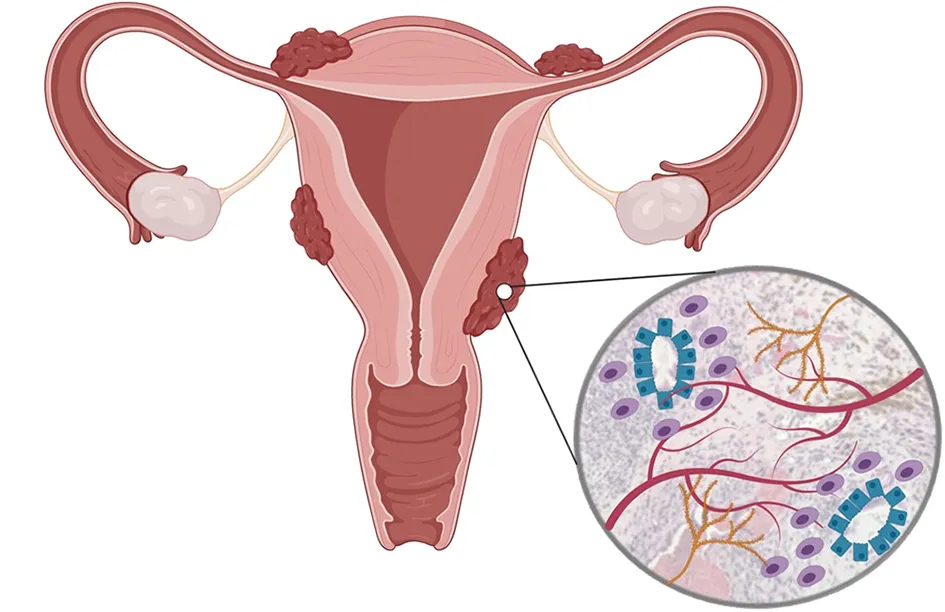
Image Credit: Original image from Hogg, Horne, and Greaves, via Wikimedia Commons. Edited by the user to remove the text legends. Licensed under CC BY 4.0.
Reference
1. Vercellini, P., Viganò, P., Somigliana, E., et al. (2014). Endometriosis: pathogenesis and treatment. Nature Reviews Endocrinology, 10(5), 261-275.
2. Hudson, N. (2022). The missed disease? Endometriosis as an example of ‘undone science’. Reproductive biomedicine & society online, 14, 20-27.
3. Miller, J. E., Ahn, S. H., Monsanto, S. P., et al. (2016). Implications of immune dysfunction on endometriosis associated infertility. Oncotarget, 8(4), 7138.
4. García-Gómez, E., Vázquez-Martínez, E. R., Reyes-Mayoral, C., et al. (2020). Regulation of inflammation pathways and inflammasome by sex steroid hormones in endometriosis. Frontiers in endocrinology, 10, 935.
5. Bouic, P. J. (2023). Endometriosis and infertility: the hidden link between endometritis, hormonal imbalances and immune dysfunctions preventing implantation!. JBRA Assisted Reproduction, 27(2), 144.
6. Li, J., Ma, J., Fei, X., et al. (2019). Roles of cell migration and invasion mediated by Twist in endometriosis. Journal of Obstetrics and Gynaecology Research, 45(8), 1488-1496.
7. Coiplet, E., Courbiere, B., Agostini, A., et al. (2022). Endometriosis and environmental factors: A critical review. Journal of Gynecology Obstetrics and Human Reproduction, 51(7), 102418.
8. Smarr, M. M., Kannan, K., & Louis, G. M. B. (2016). Endocrine disrupting chemicals and endometriosis. Fertility and Sterility, 106(4), 959-966.
9. Garcia Garcia, J. M., Vannuzzi, V., Donati, C., et al. (2023). Endometriosis: cellular and molecular mechanisms leading to fibrosis. Reproductive Sciences, 30(5), 1453-1461.
10. Alimi, Y., Iwanaga, J., Loukas, M., et al. (2018). The clinical anatomy of endometriosis: a review. Cureus, 10(9).
11. Zullo, F., Spagnolo, E., Saccone, G., et al. (2017). Endometriosis and obstetrics complications: a systematic review and meta-analysis. Fertility and sterility, 108(4), 667-672.
12. Christodoulakos, G., Augoulea, A., Lambrinoudaki, I., et al. (2007). Pathogenesis of endometriosis: the role of defective ‘immunosurveillance’. The European Journal of Contraception & Reproductive Health Care, 12(3), 194-202.
13. Rocha, A. L. L., Reis, F. M., & Taylor, R. N. (2013). Angiogenesis and endometriosis. Obstetrics and gynecology international, 2013(1), 859619.
14. Umezawa, M., Saito, Y., Tanaka-Hattori, N., et al. (2012). Expression profile of extracellular matrix and adhesion molecules in the development of endometriosis in a mouse model. Reproductive Sciences, 19(12), 1365-1372.
15. Cai, G., Hou, Z., Sun, W., et al. (2022). Recent developments in biomaterial-based hydrogel as the delivery system for repairing endometrial injury. Frontiers in Bioengineering and Biotechnology, 10, 894252.
16. Maroun, P., Cooper, M. J., Reid, G. D., et al. (2009). Relevance of gastrointestinal symptoms in endometriosis. Australian and New Zealand Journal of Obstetrics and Gynaecology, 49(4), 411-414.
17. Gabriel, I., Vitonis, A. F., Missmer, S. A., et al. (2022). Association between endometriosis and lower urinary tract symptoms. Fertility and Sterility, 117(4), 822-830.
18. Fauconnier, A., Staraci, S., Huchon, C., et al. (2013). Comparison of patient-and physician-based descriptions of symptoms of endometriosis: a qualitative study. Human reproduction, 28(10), 2686-2694.
19. Triolo, O., Laganà, A. S., & Sturlese, E. (2013). Chronic pelvic pain in endometriosis: an overview. Journal of clinical medicine research, 5(3), 153.
20. Mellado, B. H., Falcone, A. C., Poli-Neto, O. B., et al. (2016). Social isolation in women with endometriosis and chronic pelvic pain. International Journal of Gynecology & Obstetrics, 133(2), 199-201.
21. Rathod, S., Shanoo, A., Acharya, N., et al. (2024). Endometriosis: a comprehensive exploration of inflammatory mechanisms and fertility implications. Cureus, 16(8).
22. Katsikogiannis, N., Tsaroucha, A. K., Dimakis, K., et al. (2011). Rectal endometriosis causing colonic obstruction and concurrent endometriosis of the appendix: a case report. Journal of medical case reports, 5(1), 320.
23. Sumbodo, C. D., Tyson, K., Mooney, S., et al. (2024). The relationship between sleep disturbances and endometriosis: a systematic review. European Journal of Obstetrics & Gynecology and Reproductive Biology, 293, 1-8.
24. Horn, M., Sherman, K. A., Pehlivan, M. J., et al. (2025). Perceived cognitive functioning difficulties in individuals living with endometriosis. Journal of Health Psychology, 30(14), 4314-4332.
25. Pellizzer, M. L., Robinson, K., & Wade, T. D. (2025). Endo belly: a mixed methods exploration of body image, disordered eating, and psychopathology in endometriosis. Journal of Clinical Psychology, 81(6), 434-444.
26. Bafort, C., Beebeejaun, Y., Tomassetti, C., et al. (2020). Laparoscopic surgery for endometriosis. Cochrane Database of Systematic Reviews, (10).
27. Scardapane, A., Lorusso, F., Scioscia, M., et al. (2014). Standard high-resolution pelvic MRI vs. low-resolution pelvic MRI in the evaluation of deep infiltrating endometriosis. European radiology, 24(10), 2590-2596.
28. Maiorana, A., Incandela, D., Giambanco, L., et al. (2011). Ultrasound diagnosis of pelvic endometriosis. Journal of Endometriosis, 3(2), 105-119.
29. El-Maadawy, S. M., Alaaeldin, N., & Nagy, C. B. (2021). Role of preoperative ultrasound mapping in the surgical management of deep infiltrating endometriosis: a prospective observational study. Egyptian Journal of Radiology and Nuclear Medicine, 52(1), 159.
30. Brulport, A., Bourdon, M., Vaiman, D., et al. (2024). An integrated multi-tissue approach for endometriosis candidate biomarkers: a systematic review. Reproductive Biology and Endocrinology, 22(1), 21.
31. Bendifallah, S., Dabi, Y., Suisse, S., et al. (2022). MicroRNome analysis generates a blood-based signature for endometriosis. Scientific Reports, 12(1), 4051.
32. Sivajohan, B., Elgendi, M., Menon, C., et al. (2022). Clinical use of artificial intelligence in endometriosis: a scoping review. NPJ digital medicine, 5(1), 109.
33. Bendifallah, S., Puchar, A., Suisse, S., et al. (2022). Machine learning algorithms as new screening approach for patients with endometriosis. Scientific reports, 12(1), 639.
34. Vercellini, P., Eskenazi, B., Consonni, D., et al. (2011). Oral contraceptives and risk of endometriosis: a systematic review and meta-analysis. Human reproduction update, 17(2), 159-170.
35. Surrey, E. S. (2023). GnRH agonists in the treatment of symptomatic endometriosis: a review. F&S Reports, 4(2), 40-45.
36. Beavis, A. L., Smith, A. J. B., & Fader, A. N. (2016). Lifestyle changes and the risk of developing endometrial and ovarian cancers: opportunities for prevention and management. International journal of women’s health, 8(2016), 151-167.
37. Pavone, M., Baroni, A., Campolo, F., et al. (2024). Robotic assisted versus laparoscopic surgery for deep endometriosis: a meta-analysis of current evidence. Journal of robotic surgery, 18(1), 212.
38. Anvari-Yazdi, A. F., MacPhee, D. J., Badea, I., et al. (2025). Gynecologic postoperative anti-adhesion barriers: From biomaterials to barrier development. Biomaterials and Biosystems, 19, 100115.
39. Niedenfuehr, J. M., & Stevens, D. M. (2025). Self-reported efficacy of pelvic floor physical therapy in endometriosis patients before and after surgery: A cross-sectional study. Journal of Endometriosis and Pelvic Pain Disorders, 22840265251411726.
40. Laschke, M. W., & Menger, M. D. (2018). Basic mechanisms of vascularization in endometriosis and their clinical implications. Human reproduction update, 24(2), 207-224.
41. Buggio, L., Somigliana, E., Barbara, G., et al. (2017). Oral and depot progestin therapy for endometriosis: towards a personalized medicine. Expert opinion on pharmacotherapy, 18(15), 1569-1581.