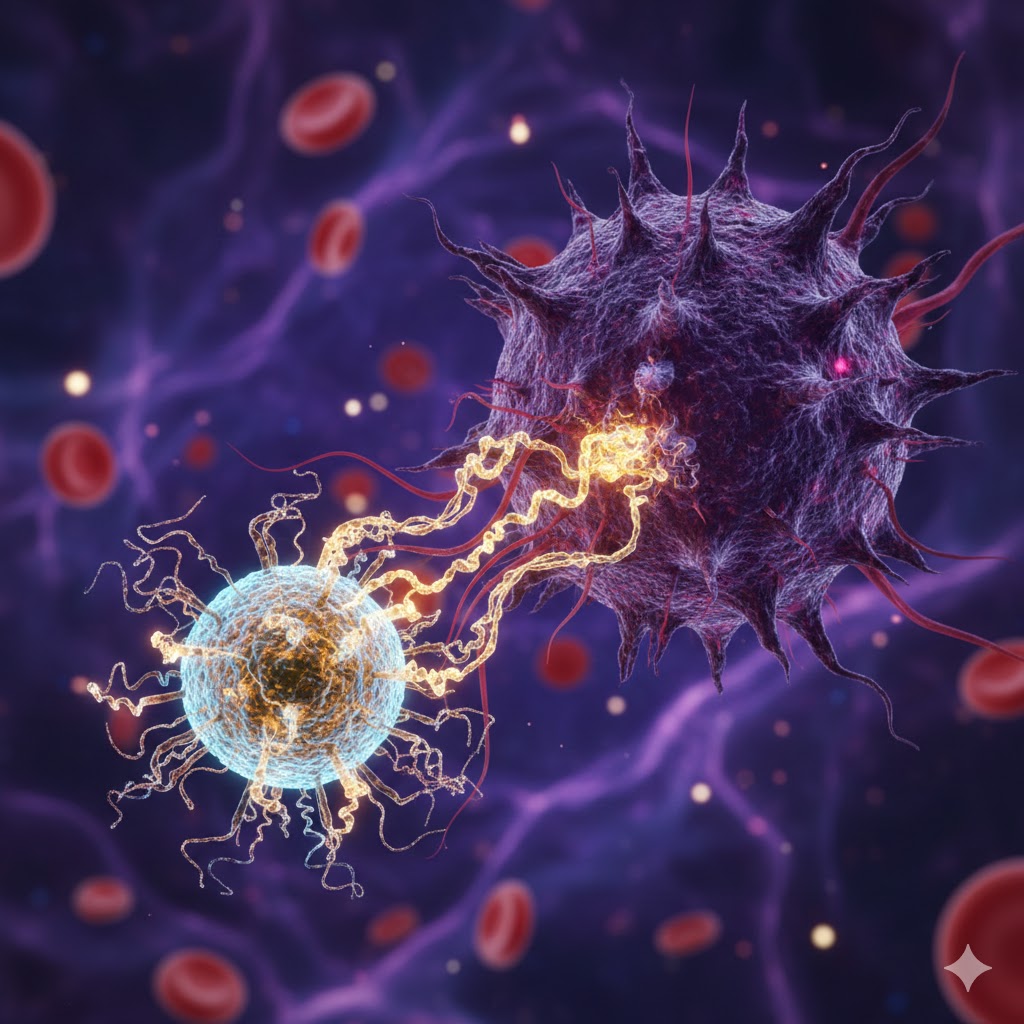
In the fast-changing field of cancer treatment, few advances have offered as much promise as Chimeric Antigen Receptor (CAR) T-cell therapy1. This highly specialized form of immunotherapy ingeniously re-engineers a patient’s own immune cells—specifically T-cells—to task them with finding and eliminating cancer cells2. Often described as a “living drug”, these engineered cells can multiply and persist within the patient’s body, providing ongoing surveillance and sustained attack on cancer3. Especially in the case of aggressive and treatment-resistant blood cancers, CAR T-cell therapy represents a historic breakthrough, as it offers lasting remissions where conventional therapies, have failed4.
The role of the immune system and cancer’s evasive tactics
T-cells are key components of the immune system, identifying and eliminating infected or abnormal cells, including cancerous ones. Under normal circumstances, T-cells recognize cancer cells by detecting specific protein fragments or antigens presented on their surface by molecules known as the major histocompatibility complex (MHC)5. However, cancer cells have evolved to develop sneaky evasion tactics of their own. They can downregulate MHC expression, mutate or lose surface antigens, and create immunosuppressive environments that dampen T-cell responses. These adaptations effectively shield tumors from natural immune detection systems, which allows cancers to flourish unchecked.
Engineering the super soldier: the science behind CAR T-cells
The genius of CAR T-cell therapy lies in the construct of the chimeric antigen receptor itself. The term “chimeric” denotes its hybrid nature, combining components from different biological origins to create a novel receptor on the T-cell surface.
A CAR consists of several key domains as described in the following sections.
Extracellular antigen-binding domain (single chain variable fragment, scFv)
Derived from the variable portions of an antibody, this segment enables CAR T-cells to directly recognize and bind a specific antigen on cancer cells. This is independent of MHC presentation, although MHC-dependent T cell receptor-mimic CARs have also been described1, 6. This bypasses one of cancer’s primary evasion methods. Common targets include CD19, prevalent on many B-cell malignancies, and BCMA, expressed on multiple myeloma cells7, 8.
Transmembrane domain
This anchors the receptor firmly into the T-cell membrane1. Studies suggest that it influences CAR expression level, dimerize with endogenous signaling molecules, and may have roles in signaling or synapse formation.
Intracellular signaling domains
These transmit activation signals upon antigen binding. The CD3 zeta chain provides a primary activation cue, while additional costimulatory domains such as CD28 enhance T-cell activation, proliferation, and persistence9. These innovations form the basis of second- and third-generation CARs, with improved therapeutic efficacy and durability.
When a CAR binds its target antigen on a cancer cell, the receptor triggers powerful activation signals in the T-cell, thus causing rapid expansion of CAR T-cells within the patient. These activated cells release cytotoxic proteins like perforin and granzymes, which kills cancer cells directly10. They also secrete cytokines that amplify the immune response by recruiting and activating other immune cells.
It is worth mentioning that CAR T-cells can remain in the body for months or even years and thus provide long-term surveillance against cancer relapses.
A personalized journey: from patient to living drug
The process of CAR T-cell therapy is a highly personalized and multi-step journey which is aligned with the principles of precision medicine3:
T-cell collection (apheresis)
Blood is drawn from the patient, and a specialized machine separates out T-cells, and returns the remainder to circulation11.
Genetic modification
Collected T-cells are sent to specialized labs, where viral vectors introduce the CAR gene into T-cell DNA, thereby successfully reprogramming them to target cancer12.
T-cell expansion
The engineered CAR T-cells are cultured and multiplied over two to four weeks, growing to hundreds of millions or even billions of cells13.
Lymphodepletion
Prior to infusion, patients usually undergo chemotherapy to clear existing immune cells, thereby making room for the CAR T-cells to engraft and expand14.
CAR T-cell infusion
The expanded cells are thawed and intravenously infused back into the patient15.
Monitoring
Post-infusion, patients are carefully observed in specialized centers for potential side effects, which can be intense and require prompt intervention16.
In parallel, disease modeling efforts using patient-derived cancer cells and animal models play a critical role in optimizing CAR T designs and predicting responses for individual patients17.
Clinical successes: transforming outcomes in blood cancers
Currently, CAR T-cell therapy is approved mainly for certain relapsed or refractory blood cancers. These include B-cell acute lymphoblastic leukemia (ALL), particularly in pediatric and young adults; aggressive lymphomas such as diffuse large B-cell lymphoma (DLBCL), follicular lymphoma, and mantle cell lymphoma; and multiple myeloma targeting the BCMA antigen18-21.
For many eligible patients, CAR T-cell therapy achieves impressive response rates, including complete and durable remissions. Some have remained cancer-free for years, suggesting the potential for cure in aggressive malignancies that were previously deemed incurable.
Challenges and side effects unique to CAR T-cell therapy
Despite these successes, CAR T-cell therapy is not without risks and limitations. The powerful immune activation it provokes can lead to distinct toxicities, including:
- Cytokine release syndrome (CRS): This is the most common and potentially dangerous side effect. CRS arises from the rapid release of cytokines by activated CAR T-cells22. Symptoms range from mild flu-like illness to life-threatening inflammation with low blood pressure, respiratory distress, and organ failure. Timely recognition and management with immunosuppressive agents like tocilizumab and corticosteroids are critical.
- Immune effector cell-associated neurotoxicity syndrome (ICANS): The neurological side effects of ICANS include headache, confusion, seizures, aphasia, and in severe cases, cerebral edema23. These require close monitoring and supportive care.
- On-target, off-tumor toxicity: CAR T-cells may also attack healthy cells expressing the target antigen. For example, CD19-directed CAR T-cells eliminate normal B-cells alongside malignant ones, causing prolonged B-cell aplasia and increased infection risk24.
Additional challenges encompass prohibitively high costs, complex manufacturing processes that take weeks (necessitating interim “bridging” therapies), and logistical demands for specialized treatment centers25-27.
CAR T-cell therapies have demonstrated limited success in solid tumors, primarily due to hostile tumor microenvironment and tumor heterogeneity28. However, the field is actively seeking solutions to these barriers. Furthermore, cancer cell antigen escape or T-cell exhaustion can contribute to relapse after initial response29.
Future directions: innovations and expanding horizons
Ongoing research and development are rapidly advancing CAR T-cell therapy:
- Enhanced CAR designs: Next-generation CARs incorporate improved signaling domains, safety switches to mitigate off-tumor effects, and dual/bi-specific targeting to prevent antigen escape30, 31.
- Overcoming solid tumors: Novel targets, regional delivery methods, and strategies to modulate the tumor microenvironment are under exploration to extend CAR T therapy effectiveness beyond blood cancers28, 32.
- Toxicity management: Improved predictive biomarkers for CRS, along with refined treatment algorithms, aim to improve safety33, 34.
- Expanding indications: CAR T-cells are being studied in other hematologic malignancies, various solid tumors, and even non-malignant diseases such as autoimmune disorders (e.g., lupus, multiple sclerosis) and chronic infections like HIV35-37.
- Manufacturing innovations: To address cost and accessibility, “off-the-shelf” allogeneic CAR T-cells derived from healthy donors are being developed, though certain challenges are yet to be addressed38. Approaches for in-vivo CAR T-cell engineering, where modification occurs directly in the patient’s body, and non-viral gene delivery techniques offer promises to simplify production and lower costs39, 40.
Conclusion
CAR T-cell therapy represents a paradigm shift in oncology by using a patient’s own reprogrammed T-cells to create a living, persistent therapy against treatment-resistant blood cancers. While challenges in safety and accessibility remain, this innovation exemplifies the extraordinary potential of precision medicine to lead the future of cancer care.