To understand the intricate architecture and dynamic processes of living systems, we need powerful methods that explore beyond what is visible. Spectroscopy and imaging techniques form the backbone of this exploration1. They involve studying electromagnetic (EM) radiation interactions with matter and translating them into spatial visualizations. These techniques allow us to know not only “where” structures exist but also “what” molecules are present and “how much” of them exist. Therefore, they offer us an unparalleled insight into molecular composition, structure, and function across all biological scales. Evidently, these techniques have been playing transformative roles in foundational biology and clinical medicine2, 3.
EM spectrum and interaction modes
The EM spectrum spans from long radio waves to short gamma rays. Biological applications exploit distinct regions based on the energy of the photons and their interaction mechanisms with matter.
Following are the main types of interaction phenomena that underpin the various techniques:
- Absorption: Molecules absorb photons, leading to electronic or vibrational (IR) transitions4. This helps to reveal molecular composition and concentration.
- Emission: Electronically excited molecules return to the ground state by releasing energy as light (fluorescence, phosphorescence). This offers high sensitivity and molecular specificity.
- Scattering: Incident light deviates in direction5. Inelastic scattering (Raman) involves a small energy shift corresponding to molecular vibrations.
- Diffraction: Used in X-ray techniques, such as X-ray crystallography, to reveal precise atomic structure based on predictable interference patterns from ordered materials6.
Differentiating Spectroscopy and Imaging
Many cutting-edge biological methods have integrated spectroscopic principles into imaging modalities. However, the fundamental distinction between spectroscopy and imaging lies in their primary data output and informational focus. Spectroscopy primarily measures the interaction of EM radiation with a sample as a function of wavelength or energy, and this results in a spectrum. This spectrum is a molecular fingerprint that identifies the chemical components, concentration, and molecular structure of the analyzed sample (the “what”). Conversely, Imaging focuses on measuring the spatial distribution of a signal to produce a map or image. It aids in revealing the location, morphology, and spatial arrangement of biological features (the “where”).
The most powerful current technologies, referred to as spectroscopic imaging (e.g., FTIR Imaging, Raman Microscopy, and Mass spectrometry imaging (MSI)), combines both spectroscopy and imaging7-9. They collect a full spectrum for every spatial point in an image, generating a data cube. In this way, these techniques simultaneously provide high-resolution positional information (the image) and detailed chemical identification (the spectrum) at every location.
UV-Visible (UV-Vis) spectroscopy and imaging
UV-Vis spectroscopy measures the absorption of ultraviolet and visible light by chromophores10. It is a fundamental quantitative tool, as absorption is proportional to concentration. It is routinely used in biochemistry for nucleic acid and protein quantification, enzyme assay monitoring, and cell viability assessments in vitro11-14.
Absorption microscopy spatially maps this principle, helping to visualize the distribution of naturally absorbing molecules like hemoglobin or artificially stained components within cells and tissues15. This process thus links the molecular presence to its exact location.
Fluorescence spectroscopy and microscopy
Fluorescence is characterized by the Stokes shift, which is longer emission wavelength than excitation16. It is vital for its exceptional sensitivity (often single-molecule level) and specificity, which is often enabled by external fluorophores or genetically encoded fluorescent proteins.
Microscopic modalities are key to dynamic biological imaging:
- Confocal microscopy uses a pinhole to achieve 3D optical sectioning and high-contrast imaging17.
- Multi-photon microscopy uses lower-energy photons for deep tissue imaging with reduced phototoxicity, which is essential for in vivo studies18.
- Super-resolution techniques (e.g., STORM, PALM, STED) bypass the classical diffraction limit19-21. This allows the visualization of organelles and protein complexes at the nanometer scale.
The applications are wide-ranging, such as gene expression, protein-protein interactions (eg, FRET), and tracking ion fluxes in live cells22-24. It helps to profoundly impact drug discovery and disease mechanism studies.
Infrared (IR) spectroscopy and imaging
IR spectroscopy is used to probe the vibrational modes of functional groups like C=O and N-H, to generate a detailed “chemical fingerprint” that characterizes the macromolecular composition (proteins, lipids, nucleic acids etc.) 25.
Fourier-transform infrared (FTIR) imaging combines the spectral richness of IR with microscopy to generate spatially-resolved biochemical maps26. This label-free technique can discriminate tissues based on subtle changes in their biochemical profiles. They can help detecting cancerous changes or fibrosis by mapping lipid-to-protein ratios or shifts in protein secondary structure, helping to complement molecular pathology27.
Raman spectroscopy and imaging
Raman spectroscopy relies on inelastic scattering, thus providing complementary vibrational information to IR28. This technique is minimally sensitive to water, which makes it highly advantageous for biological samples. It is also uniquely sensitive to non-polar bonds.
Raman microscopy creates high-resolution chemical maps of cells and tissues in situ without exogenous labels29. Key applications include:
- Intraoperative tumor margin identification for rapid surgical guidance30.
- Single-cell molecular profiling to characterize cellular heterogeneity31.
- Drug distribution studies within tissue samples32.
Advanced techniques like surface-enhanced Raman spectroscopy (SERS) utilize metallic nanoparticles to amplify the typically weak Raman signal, thereby achieving higher sensitivity33.
Nuclear magnetic resonance (NMR) spectroscopy and magnetic resonance imaging (MRI)
NMR spectroscopy utilizes the magnetic properties of atomic nuclei (eg, H, C) in a strong external magnetic field34. It analyzes the absorption and re-emission of radiofrequency energy. This helps to provide precise data on molecular structure and dynamics in solutions, which is crucial for understanding protein folding and detailed metabolomic analysis.
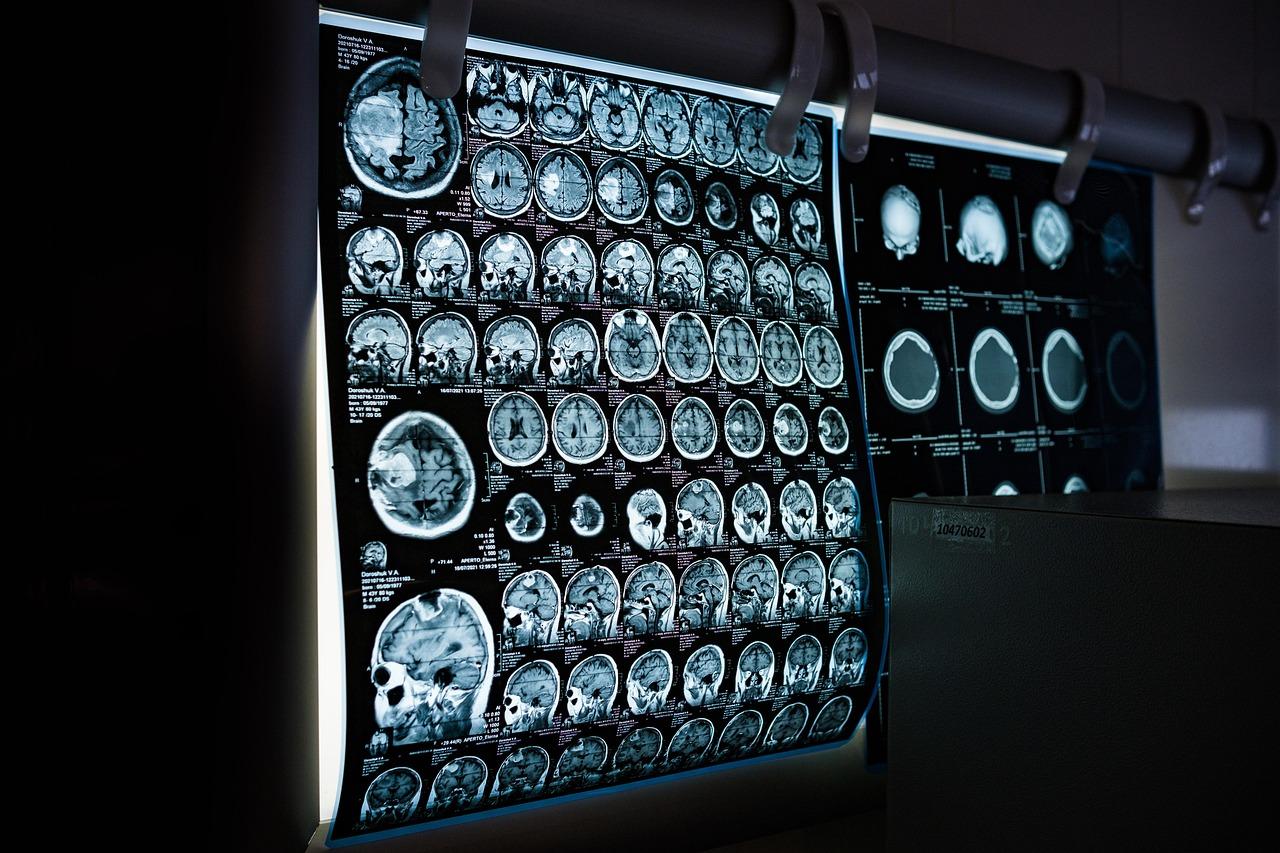
MRI is the clinical extension of the above technique. It helps to generate non-invasive, high-resolution soft tissue images. Specialized MRI techniques include:
- Functional MRI (fMRI): It is used to monitor blood oxygenation level changes (BOLD contrast) to map brain activity35.
- Diffusion tensor imaging (DTI): It helps to visualize the directionality of water diffusion to map neural white matter tracts36.
- Magnetic resonance spectroscopy (MRS): It is utilized for quantifying regional metabolite concentrations in vivo for clinical assessment of tumors or neurological disorders37.
Mass spectrometry and mass spectrometry imaging
Mass spectrometry ionizes molecules and separates them based on their mass-to-charge ratio (m/z) 38. It offers ultra-high sensitivity for the identification and quantification of thousands of biomolecules. It is the core technology that drives proteomics and metabolomics.
MSI is used to spatially map molecular species directly from a tissue surface. Techniques like MALDI-MSI and DESI-MSI ionize molecules layer by layer, helping to offer an unprecedented view of39-40:
- Drug pharmacokinetics by tracing compound distribution in tissues41.
- Tumor heterogeneity based on localized lipid and metabolite profiles42.
- Biomarker mapping for fundamental disease research43.
X-ray diffraction (XRD) and X-ray imaging
XRD is used to study the atomic structure of ordered materials, primarily crystallized proteins and nucleic acids44. Analyzing the diffraction patterns allows scientists to determine the precise 3D arrangement of atoms, which is a foundational pillar of structural biology.
X-ray imaging techniques are widely used in the clinic:
- Computed tomography (CT) is used to generate 3D cross-sectional images by rotating an X-ray source and detectors around the patient45. This technique excels in high-contrast imaging of bone and dense structures.
- X-ray Microscopy offers high-resolution imaging of cellular ultrastructure in thick, prepared samples46.
Challenges
Despite their utility, these sophisticated methods face critical challenges:
- Continuous innovation is paramount to improving spatial and temporal resolutions to capture ultrafast biological events at the nanoscale.
- Minimizing artifacts and maintaining the native, physiological state of the sample during preparation and measurement is difficult47.
- Generating massive, multi-dimensional datasets requires investment in specialized infrastructure and advanced computational tools, including artificial intelligence, for effective interpretation and biomarker extraction48.
- High costs, specialized instrumentation, and training limit the broad deployment of many cutting-edge techniques in research and clinical settings49.
- Bridging insights from simplified in vitro or fixed samples to the complex, dynamic environment of a living organism (in vivo) remains a significant hurdle50.
Future directions: innovation and integration
The future of biological imaging and spectroscopy is focused on integration and intelligence:
- Multimodal Imaging Platforms leverage the integration of complementary techniques (eg, PET-MRI, fluorescence-Raman) within a single system to maximize the information gathered about a biological system51-52.
- Artificial Intelligence and machine learning are crucial for automating complex image analysis, identifying subtle patterns invisible to the human eye, and optimizing experimental design53.
- There is a growing need for developing smaller, more robust, and lower-cost devices that can enable point-of-care diagnostics and be used for fieldwork applications54.
- Continuous development of non-linear optical methods is enabling the dynamic, native imaging of processes which allows us to do away with the perturbation caused by fluorescent markers55.
- Theranostics is no longer a buzzword as combining diagnostic imaging with targeted therapeutic delivery mechanisms helps us to create integrated systems for personalized treatment and simultaneous monitoring of patient responses56.
Conclusion
Spectroscopy and imaging have fundamentally revolutionized life sciences by allowing us to observe and measure biological processes with molecular precision. This evolving technological landscape is driven by intelligent computation, and it continues to expand our understanding of disease mechanisms and physiological processes. They also serve as the essential enablers of precision medicine and by doing so these methods promise to deliver increasingly clearer, richer, and more detailed insights into the complex fabric of life57.