FAQs
1. Why is ARDS considered a systemic syndrome rather than just a lung disease?
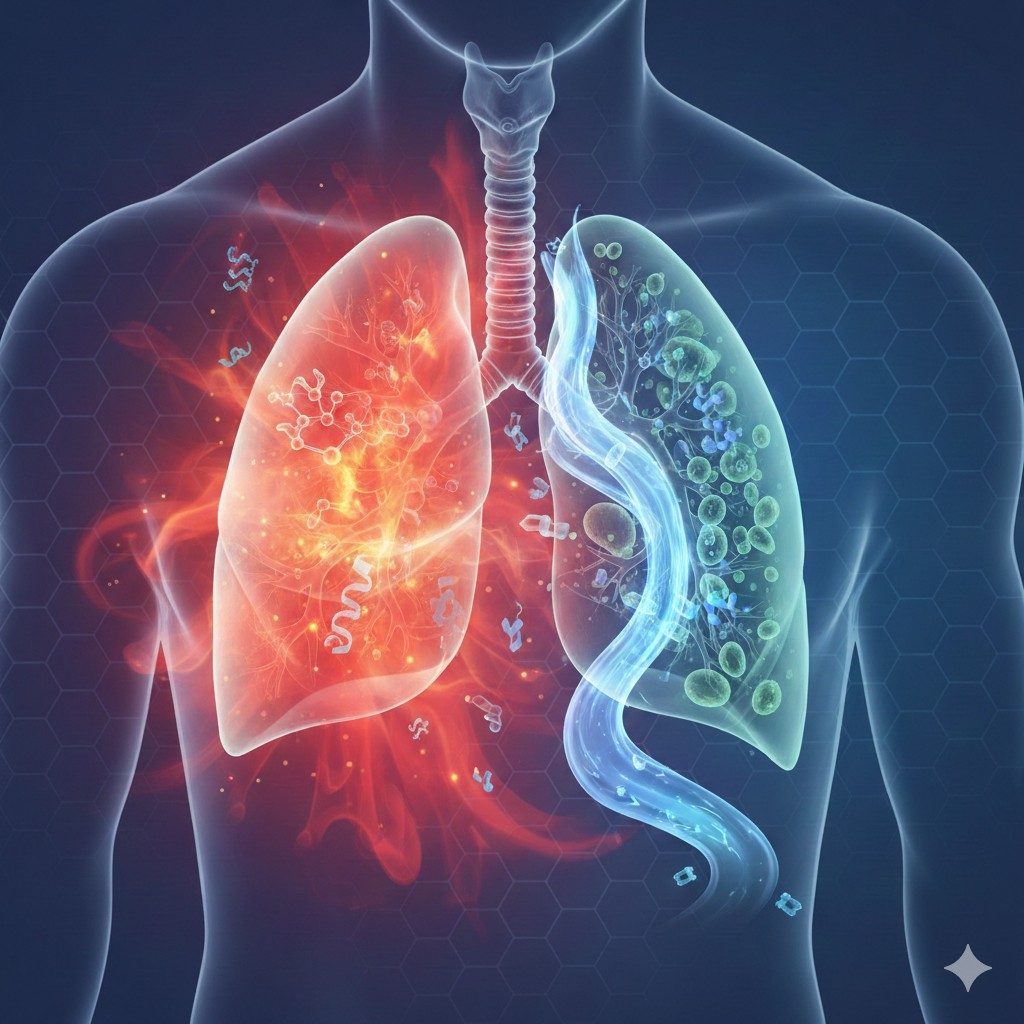
Although ARDS originates in the lungs, it rarely stays there. When the lung’s barriers fail, the body’s inflammatory mediators and cytokines “spill over” into the rest of the body. These systemic spread triggers a “cytokine storm” that can travel through the bloodstream and damage distant organs like the kidneys, heart, and brain.
2. What is the role of nutrition in ARDS recovery?
During the cytokine storm, the body burns calories at an incredible rate to sustain the immune response. Without early enteral nutrition (feeding via a tube to the stomach), the body begins to consume its own muscle tissue for fuel, specifically of the diaphragm, which can make it much harder for a patient to eventually breathe without help.
3. How is ARDS distinguished from cardiogenic pulmonary edema?
While both conditions cause “fluid in the lungs,” they happen for very different reasons. In cardiogenic edema, fluid is “pushed” into the lungs because of high pressure from a failing heart. In ARDS, the fluid “leaks” in because the lung’s protective lining is physically damaged by inflammation. Clinicians use echocardiograms or pulmonary artery catheters to confirm that the heart’s filling pressures are normal.
Reference
1. Bellani, G., Laffey, J. G., Pham, T., et al. (2016). Epidemiology, patterns of care, and mortality for patients with acute respiratory distress syndrome in intensive care units in 50 countries. Jama, 315(8), 788-800.
2. Villar, J. (2011). What is the acute respiratory distress syndrome?. Respiratory care, 56(10), 1539-1545.
3. Sheu, C. C., Gong, M. N., Zhai, R., et al. (2010). Clinical characteristics and outcomes of sepsis-related vs non-sepsis-related ARDS. Chest, 138(3), 559-567.
4. Esquivel-Ruiz, S., González-Rodríguez, P., Lorente, J. A., et al. (2021). Extracellular vesicles and alveolar epithelial-capillary barrier disruption in acute respiratory distress syndrome: pathophysiological role and therapeutic potential. Frontiers in Physiology, 12, 752287.
5. Coperchini, F., Chiovato, L., Croce, L., et al. (2020). The cytokine storm in COVID-19: An overview of the involvement of the chemokine/chemokine-receptor system. Cytokine & growth factor reviews, 53(2020), 25-32.
6. Vichare, R., & Janjic, J. M. (2022). Macrophage-targeted nanomedicines for ARDS/ALI: promise and potential. Inflammation, 45(6), 2124-2141.
7. Li, W., Li, D., Chen, Y., et al. (2022). Classic signaling pathways in alveolar injury and repair involved in sepsis‐induced ALI/ARDS: new research progress and prospect. Disease markers, 2022(1), 6362344.
8. Dekker, A. B. E., Krijnen, P., & Schipper, I. B. (2016). Predictive value of cytokines for developing complications after polytrauma. World journal of critical care medicine, 5(3), 187.
9. Meduri, G. U., & Eltorky, M. A. (2015). Understanding ARDS-associated fibroproliferation. Intensive care medicine, 41(3), 517-520.
10. Xu, H., Sheng, S., Luo, W., et al. (2023). Acute respiratory distress syndrome heterogeneity and the septic ARDS subgroup. Frontiers in immunology, 14, 1277161.
11. Gattinoni, L., Marini, J. J., Pesenti, A., et al. (2016). The” baby lung” became an adult. Intensive care medicine, 42(5), 663-673.
12. Baedorf Kassis, E. N., Bastos, A. B., Schaefer, M. S., et al. (2022). Adaptive support ventilation and lung-protective ventilation in ARDS. Respiratory Care, 67(12), 1542-1550.
13. Scholten, E. L., Beitler, J. R., Prisk, G. K., et al. (2017). Treatment of ARDS with prone positioning. Chest, 151(1), 215-224.
14. Combes, A., Hajage, D., Capellier, G., et al. (2018). Extracorporeal membrane oxygenation for severe acute respiratory distress syndrome. New England Journal of Medicine, 378(21), 1965-1975.
15. Peter, J. V., John, P., Graham, P. L., et al. (2008). Corticosteroids in the prevention and treatment of acute respiratory distress syndrome (ARDS) in adults: meta-analysis. Bmj, 336(7651), 1006-1009.
16. Al-Husinat, L. I., Azzam, S., Al Sharie, S., et al. (2025). A narrative review on the future of ARDS: evolving definitions, pathophysiology, and tailored management. Critical Care, 29(1), 88.
17. Tomescu, D., Popescu, M., Akil, A., et al. (2023). The potential role of extracorporeal cytokine removal with CytoSorb® as an adjuvant therapy in Acute Respiratory Distress Syndrome. The International Journal of Artificial Organs, 46(12), 605-617.
18. Wang, F., Li, Y., Wang, B., et al. (2023). The safety and efficacy of mesenchymal stromal cells in ARDS: a meta-analysis of randomized controlled trials. Critical Care, 27(1), 31.
19. Zhang, Z., Navarese, E. P., Zheng, B., et al. (2020). Analytics with artificial intelligence to advance the treatment of acute respiratory distress syndrome. Journal of Evidence‐Based Medicine, 13(4), 301-312.
20. Sturgill, J. L., Mayer, K. P., Kalema, A. G., et al. (2023). Post-intensive care syndrome and pulmonary fibrosis in patients surviving ARDS-pneumonia of COVID-19 and non-COVID-19 etiologies. Scientific Reports, 13(1), 6554.