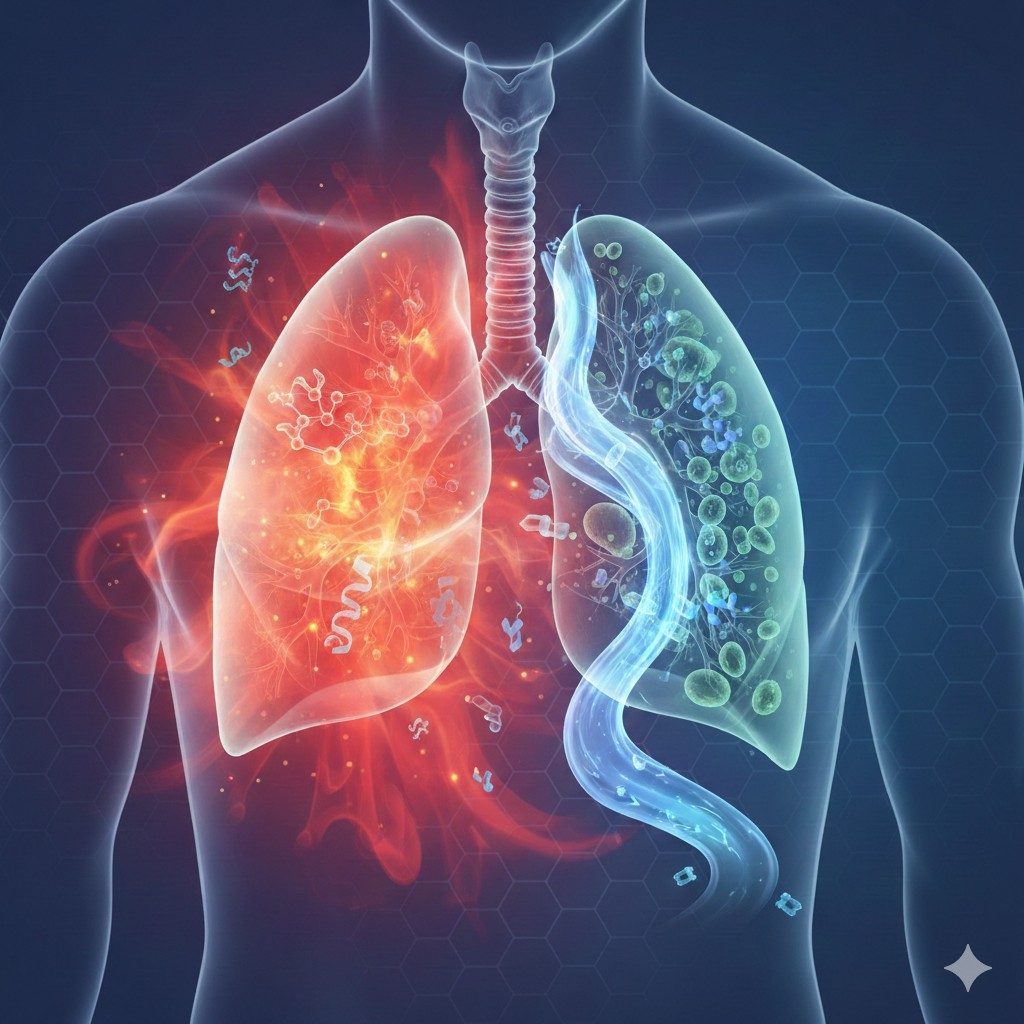
Acute Respiratory Distress Syndrome (ARDS) is one of the most severe forms of acute respiratory failure, characterized by rapid onset of profound hypoxemia, diffuse inflammatory lung injury, and non-cardiogenic pulmonary edema. It affects roughly 10% of all intensive care unit admissions and up to one-third of patients requiring mechanical ventilation, thus posing a central challenge in critical care medicine1. Even after many years of research, ARDS continues to cause significant morbidity and mortality, primarily because disease-modifying therapies have not kept pace with advancements in supportive care.
Earlier, ARDS was dismissed simply as “wet lungs.2” but now it is recognized as a biologically heterogeneous disorder in which dysregulated immune responses play a decisive role. A growing body of evidence shows ARDS isn’t just a localized lung condition. It’s a systemic inflammatory syndrome that the lung injury itself triggers and then amplifies throughout the body.
The syndrome typically follows within a week of a major event, like sepsis, severe pneumonia, aspiration, or trauma3. These events cause the abrupt disruption of the alveolar–capillary barrier, which is the ultra-thin interface responsible for gas exchange4. When this barrier fails, protein-rich fluid floods the alveoli, making them heavy, stiff, and prone to collapse. At the same time, inflammatory mediators leak into the bloodstream. This changes the lung from a passive target into an active driver of inflammation throughout the body. Clinically, this shows up as persistent hypoxemia and early dysfunction of distant organs, which cannot be solely explained by inadequate oxygenation.
The cytokine storm as a driver of lung and multiorgan injury
Initiation of the inflammatory cascade
The cytokine storm is at the center of this systemic process5. Following the initial lung injury, resident immune cells like alveolar macrophages initiate a powerful inflammatory cascade6. This response recruits neutrophils, dendritic cells, and other immune populations, pushing cytokine release far beyond what the body can contain.
Self-perpetuating immune dysregulation
Excessive activation of intracellular signaling pathways, like NF-κB, JAK/STAT, and MAPK, keep the inflammatory loop running7. Instead of clearing the infection or injury, this dysregulated signaling damages the lung’s delicate endothelial and epithelial barriers, promotes oxidative stress, and causes more vascular leakage. It becomes a vicious cycle where inflammation causes injury, and that injury fuels even more inflammation.
Cytokine spillover and multiorgan dysfunction
Importantly, the spillover of cytokines into the bloodstream explains why multiorgan failure, rather than just respiratory issues, is the leading cause of death in ARDS8. These circulating mediators disrupt the blood–brain barrier, weaken heart function, suppress bone marrow activity, and impair the kidneys. They also trigger microvascular clotting in the liver and kidneys. Viewing the cytokine storm as the link to multiorgan dysfunction provides a clear explanation for why the sickest patients decline so rapidly across their entire body.
The biological stages of lung injury and repair
The exudative phase: inflammatory flooding and barrier failure
ARDS unfolds as a dynamic biological process rather than a single event. In the early exudative phase, which dominates the first week of illness, inflammatory fluid rapidly fills the alveoli. Damaged cells form hyaline membranes that coat the air spaces, which severely impairs gas exchange9. During this phase, cytokine levels peak, leaving the lung both mechanically fragile and immunologically volatile.
The proliferative phase: repair versus dysregulation
As the disease moves into the proliferative phase, the body attempts to restore the lung’s barriers and clear out the fluid9. While many patients improve during this window, the repair process can become maladaptive in others. Persistent inflammatory signaling triggers fibroblasts to deposit excessive tissue, which sets the stage for permanent structural changes in the lung.
The fibrotic phase: long-term structural remodeling
In a subset of patients, this process concludes in a fibrotic phase marked by permanent scarring and structural damage9. The loss of flexible gas-exchange surfaces leads to long-term respiratory limitations, even for those who survive the acute illness.
Precision phenotyping and biological diversity
Hyperinflammatory ARDS subphenotype
Research now shows that ARDS affects people in very different biological ways. Some patients experience an intense “hyperinflammatory” response that leads to much higher mortality rates10. Because their bodies are reacting so aggressively, they often need a different treatment plan: like targeted steroids. However, for a patient with a milder inflammatory profile that wouldn’t be as effective.
Hypoinflammatory ARDS subphenotype
On the other hand, some patients have a “hypoinflammatory” profile10. Their bodies aren’t under the same level of intense stress, and they generally have better outcomes. For these patients, aggressive treatments meant for the sicker group could actually cause more harm than good. This explains why so many past drug trials failed; by treating everyone the same way, the benefits for one group were often canceled out by the risks to the other. Moving forward, using biomarkers to identify a patient’s specific type will be the key to making sure the treatment matches the actual biological need.
Modern ventilatory management and the “baby lung” concept of ARDS
Lung-protective ventilation strategies
In ARDS, large parts of the lung become flooded or collapsed, leaving only a small fraction of healthy tissue available for breathing. This remaining area, known as the “baby lung,” has to handle the full burden of mechanical stress from a ventilator11. To protect it, doctors use “lung-protective ventilation,” which uses smaller breaths and carefully adjusted pressure to prevent the ventilator itself from causing further damage12.
Prone positioning and regional lung recruitment
Prone positioning is a highly effective way to manage severe ARDS13. Rather than relying solely on the ventilator, flipping the patient onto their stomach helps the lungs work more efficiently by balancing out air and blood flow. This technique relieves the pressure on damaged tissues and has been proven to improve survival rates when applied as a consistent part of the treatment plan.
Advanced rescue strategies and extracorporeal support in ARDS
Extracorporeal membrane oxygenation (ECMO)
When standard treatments aren’t enough to keep oxygen levels safe, ECMO can act as a life-saving bridge14. By using a machine to do the work of the lungs, it gives them a chance to rest. This allows doctors to turn the ventilator settings down to a very gentle level, preventing the cycle of injury from getting worse and provides the time needed for the lungs to recover.
Emerging immunomodulatory and cell-based therapies of ARDS
Corticosteroids and targeted immunomodulation
Corticosteroids are now a key part of treating moderate to severe ARDS because they can help blunt the body’s excessive immune response15. However, timing is everything, as they work best when used at the right moment in the inflammatory process. Other advanced treatments, like targeted biologics and extracorporeal cytokine removal strategies, are still being studied16, 17. Their success will likely depend on matching them to the right phenotype at the right stage of the disease.
Cell-based therapies and extracellular vesicles
Mesenchymal stromal cells and their extracellular vesicles represent a significant area of emerging research18. Instead of trying to physically replace damaged lung cells, these therapies work by sending signals to the body’s own cells. They work by modulating immune responses, stabilizing endothelial barriers, and promoting tissue repair rather than direct cellular replacement.
Artificial intelligence (AI) and the digital ICU
The future of ARDS care is becoming increasingly data-driven rather than relying solely on observation. Now, AI algorithms can analyze complex ventilator waveforms and lab results to identify subtle signs of lung stress19. With these advancements, doctors are better equipped to classify patients into appropriate phenotypes and suggest optimal treatments at an earlier stage. This approach enables healthcare providers to be proactive rather than reactive in their care.
Life after ARDS and the post-ICU burden
Survival from ARDS often marks the beginning of a prolonged recovery. For many survivors, leaving the ICU is just the first step in a journey that can last months or even years. While the lungs usually regain most of their function over a year, the long-term impact on the rest of the body can be significant. The Post-Intensive Care Syndrome (PICS) encompasses lasting muscle weakness, cognitive impairment, and emotional challenges like PTSD20. This makes specialized rehabilitation and long-term follow-up care a necessity rather than an option to improve the quality of life.
From cytokine storm to precision recovery
ARDS is more than just lung failure; it involves a complex interplay of immunological, mechanical, and technological factors. Targeting the cytokine storm and accounting for patient‑specific biology within a multi‑omics framework allows for more personalized care. By integrating molecular research, evidence-based lung-protective strategies, and AI, the treatment approach is shifting from acute crisis management to a structured plan for sustained recovery.